
In our 2024-2025 annual report you can read about some of the many breakthroughs and results we achieved during our latest financial year.
Together with WWF colleagues around the world, we've used our global reach and every ounce of our resolve to stand up for our precious natural world 24 hours a day, seven days a week.
Our highlights from 2024-25
-
 © Andrew Parkinson
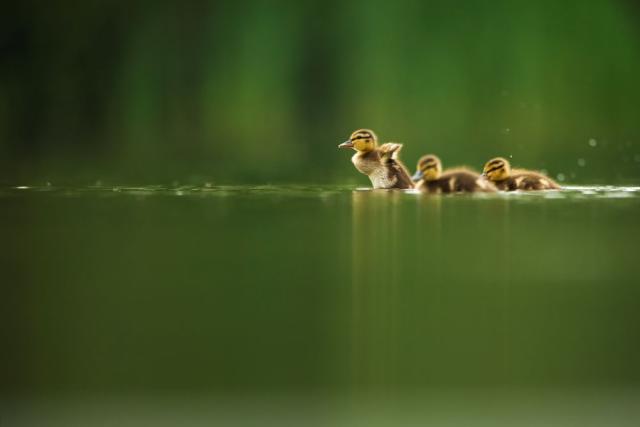
Inspiring connection with nature
MoreClose We launched Prescription for Nature, a campaign encouraging everyone to connect with nature and help restore it. Through it, we’ve already inspired more than 168,000 people to walk, run or swim in nature, use our school and business resources, or share their ‘daily dose of nature’s experiences.
Our advert, featuring This Morning’s Dr Sara Kayat, has reached 20 million people with the message that being outside for just 20 minutes a day can boost our wellbeing.
-
 © Emmanuel Rondeau/WWF-UK
Partnering to protect people and nature
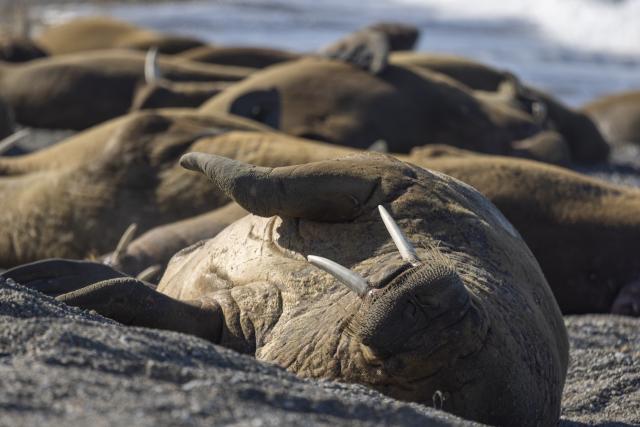
MoreClose We celebrated 15 years of support from players of People’s Postcode Lottery, who have raised more than £30 million for us. They’ve helped fund successes including boosting black rhino numbers in Kenya, our Walrus from Space project, and lion counts in Kenya and Tanzania.
We also joined forces with the British Red Cross to start restoring 900 hectares of mangroves and freshwater habitats in Kenya’s Lamu County. This is supported by £1 million raised by players of People’s Postcode Lottery.
-
 © Lewis Jefferies / WWF-UK
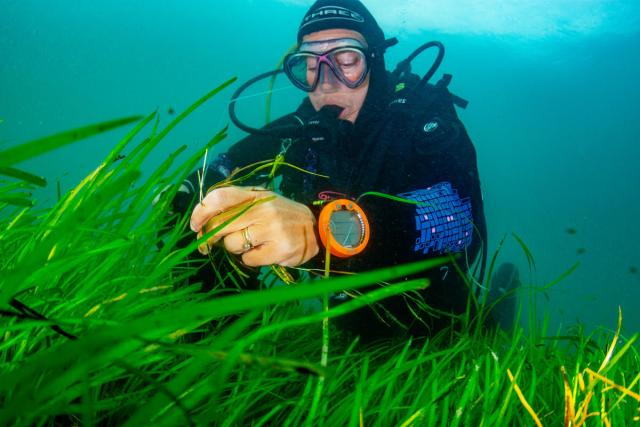
Recovering seagrass in Wales
MoreClose Together with partners in Seagrass Network Cymru, we launched the Seagrass Action Plan – the UK’s first nationwide strategic, long-term plan for seagrass recovery.
Up to 92% of the UK’s seagrass meadows have been lost, but restoring them captures carbon, reduces coastal erosion and flooding and provides a habitat for countless marine species. The Welsh government has backed the plan, committing £100,000 in extra funding to help seagrass habitats recover at sites from Holyhead to Pembrokeshire.
-
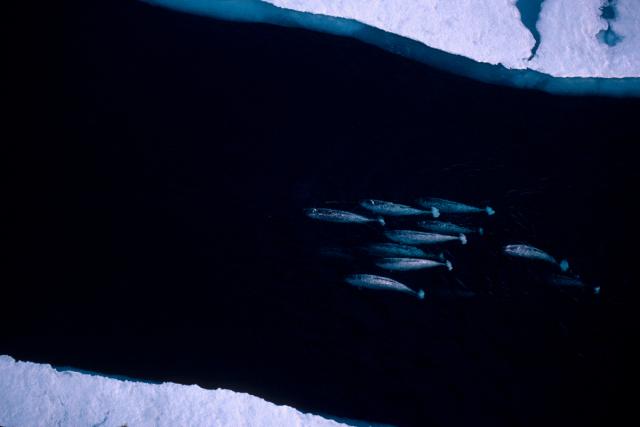 © naturepl.com / Doug Allan / WWF
Putting Arctic whales on the map
MoreClose We’ve created the first-ever map of migration superhighways to help keep whales safe. ‘Blue corridors’ connect the entire ocean, across national waters and into the high seas. But sea ice loss is resulting in more human activity in these remote waters, putting whales at risk of being struck by ships or disturbed by underwater noise. Our large-scale map highlights where important migration routes overlap with shipping lanes. This will help Arctic countries protect the vital routes.
-
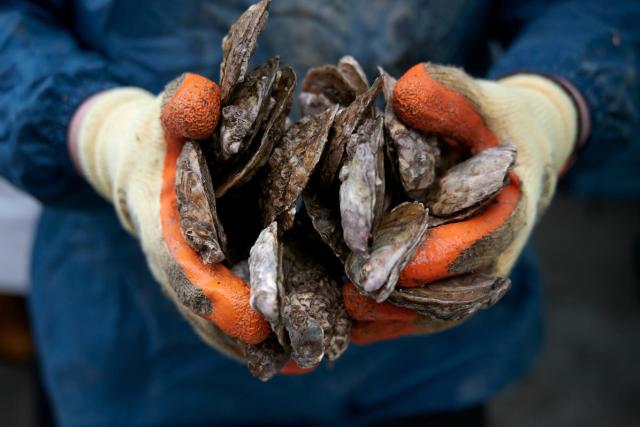 © Callum Bennetts - Maverick Photo Agency / WWF-Scotland
Flourishing Forth
MoreClose Restoration Forth has continued to make waves, winning the Coasts and Waters category of the Nature of Scotland Awards. This year, through the project, we returned a further 10,000 European flat oysters to the Firth of Forth.
We planted 64,000 more seagrass seeds, meaning we’ve now planted 210,000 seeds to restore seagrass meadows here. Oysters and seagrass both help to clean the water and stabilise the seabed. We’re working with local communities and organisations to help this important area flourish for the future.
-
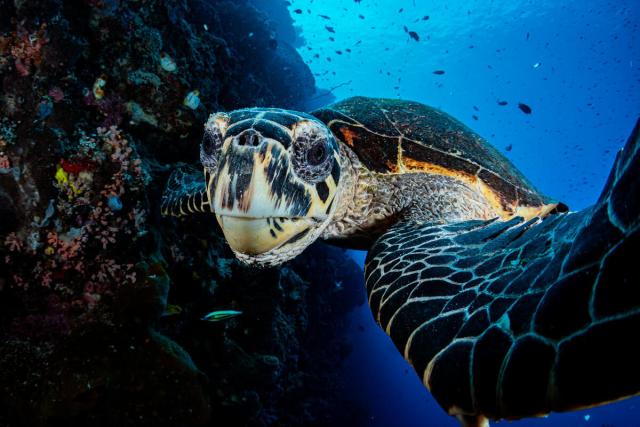 © Shane Gross / naturepl.com / WWF
Tagging turtles in Fiji
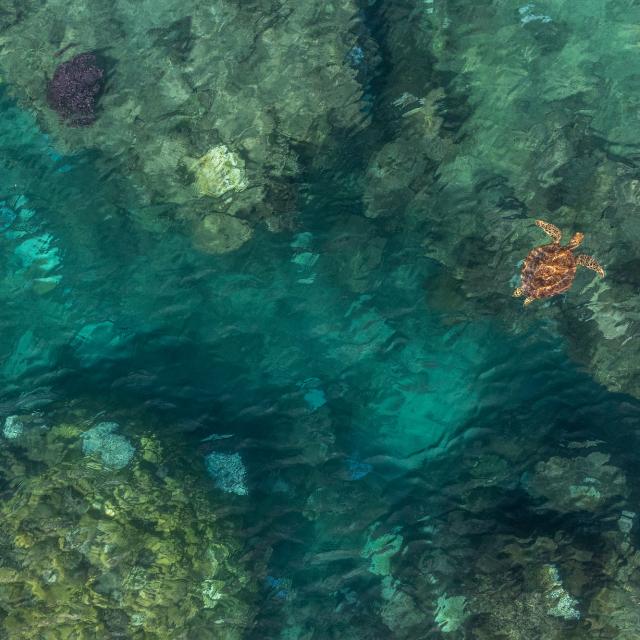
MoreClose We fitted critically endangered hawksbill turtles with satellite tags for the first time, at sites on three islands off the northern coast of Fiji. We worked with a network of community turtle guardians who combine traditional knowledge of turtles with the training and skills needed to monitor their status and health. The new satellite tags will give us vital data to build a picture of the turtles’ migration routes and feeding areas so we can better protect them, their food and their habitats.
-
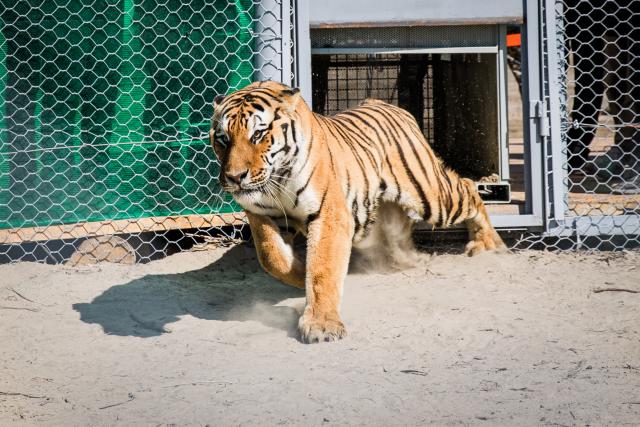 © Living Image / WWF
Returning tigers to central Asia
MoreClose The return of tigers to the wild in central Asia came a step closer when two captive Amur tigers were moved to Ile-Balkhash Nature Reserve in Kazakhstan.
Tigers have been extinct in Kazakhstan for more than 70 years, but WWF is supporting a project to bring them back. Working with local communities and others, WWF has helped to reintroduce prey and restore forests. If the pair breed successfully, their offspring should be released into the wild. The goal is about 50 wild tigers here by 2035.
-
 © Gita Defoe
Taking the planet's pulse
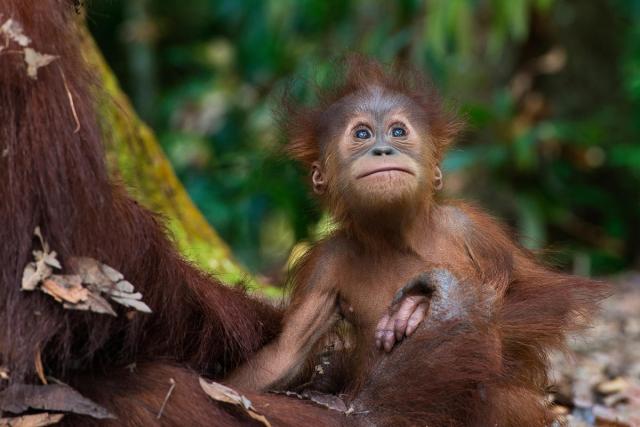
MoreClose We published the 2024 Living Planet Report, which revealed the average size of monitored wildlife populations has plummeted by 73% since 1970.
Our flagship publication warns that the world is dangerously close to irreversible tipping points such as the decline of the Amazon rainforest and melting polar ice sheets. But we can still put the world on a path to reverse nature loss by 2030. The evidence strengthened our call at UN summits on biodiversity and climate for leaders to implement commitments with much greater urgency
-
 © David Bebber / WWF-UK
Learning from a new generation
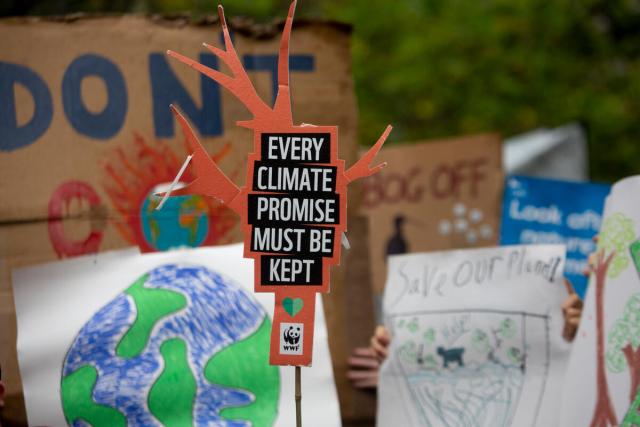
MoreClose We’re committed to supporting young people to use their vital voices for our world. This year we recruited two under-25s, Agno Kachappilly Shaiju and Aarushi Verma, to our Impact Committee – a diverse team of volunteers who help us shape and evaluate our science, public engagement and communication programmes. Agno and Aarushi have great experience in conservation and sustainability. They’ll engage with young people across the UK and help us reflect their views.
-
 © WWF-UK
Monitoring krill from space
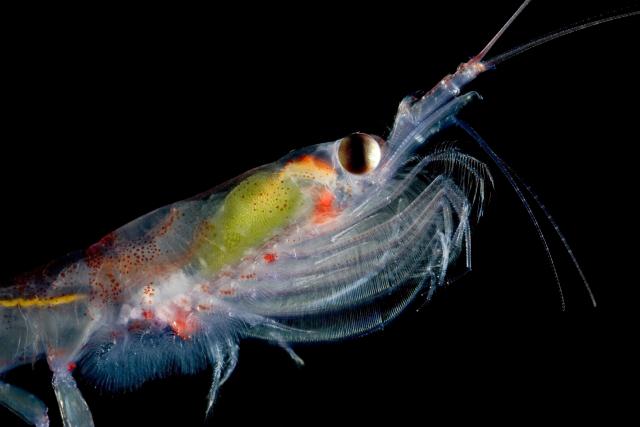
MoreClose We launched Krill from Space, a groundbreaking project, with the University of Strathclyde and British Antarctic Survey. Krill are central to the Antarctic food chain, and transfer vast quantities of carbon to the seabed. But as temperatures rise, their populations are shrinking and shifting.
Krill from Space uses satellite data, and compares light patterns, to monitor changes and improve understanding about krill numbers and distribution. This information could help us advocate for more sustainable krill fisheries.
-
 © Terese Hart
Recording new species in the Congo basin
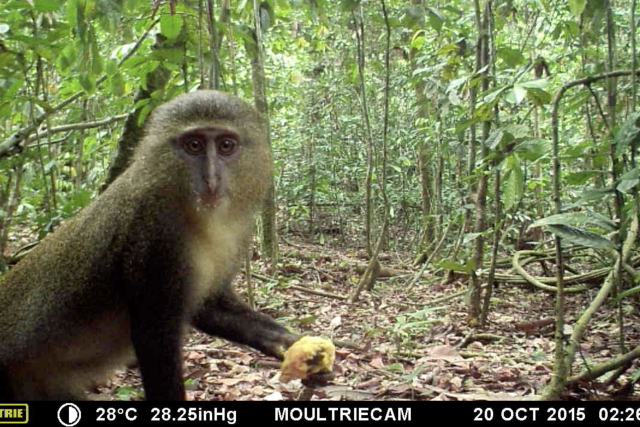
MoreClose An incredible 742 species have been newly recorded in the Congo Basin – a nature hotspot that absorbs more carbon than the Amazon.
Among the findings are a slender-snouted crocodile, clawed frogs and a monkey known locally as the ‘lesula’. A new WWF report documents the findings made in the 10 years to 2023. It highlights the region’s remarkable biodiversity and the urgent need to safeguard it. We’re supporting efforts to identify and protect the most important areas.
-
 © WWF-UK
Cycling for a thriving future
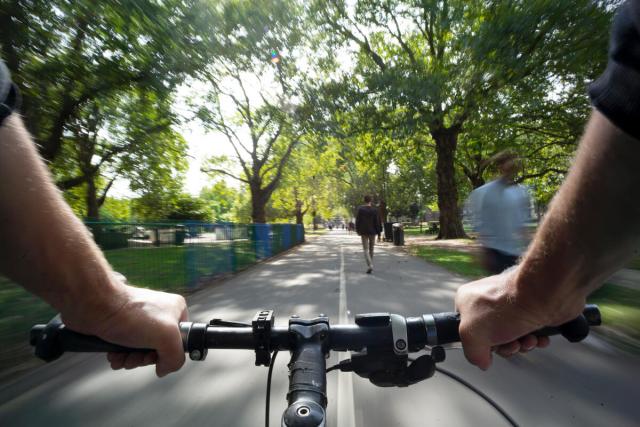
MoreClose One of our fabulous fundraisers got on his bike to raise more than £2,000 for us. Guy Busher cycled 1,000 miles in memory of his late wife Elly. He was inspired to raise money for WWF to help protect the natural world. “I would like to leave a world my grandchildren can thrive in,” he said.
Together, our wonderful team of runners, trekkers and cyclists raised more than £890,000 for us during the past 12 months.
/
-
 © Andre Dib / WWF-Brazil
 -
 © Greg Armfield / WWF-UK
 -
 © Stefan Christmann / naturepl.com / WWF
 -
 © Catherine Falls Commercial / Getty Images
 -
 © @ Tristan Fewings / WWF-UK
Financial review
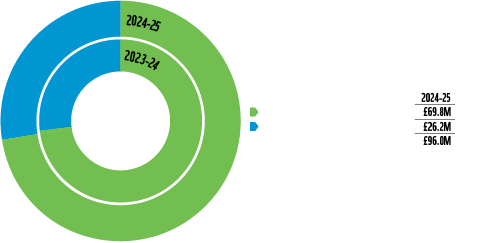
Here’s a summary of our income and expenditure for the year ending 30 June 2023, along with equivalent figures for the previous year.
Read more detail in our full Financial Statements.


Our CEO & Chair
It’s been a tough year. One where we’ve relied more than ever on the unswerving support of our amazing members, adopters, partners and many others. Your commitment provides the lifeblood for our successes and keeps our vital voice for nature strong. I can’t thank you enough.
Tanya Steele, CEO
Now more than ever, the world needs WWF – it is an essential organisation tackling the biggest challenges of our time. In the face of many pressures working against our agenda, it truly inspires me that WWF has made groundbreaking progress.
Dave Lewis, Chair
Past Annual Reports
-
 © Tim Laman / naturepl.com
2023-24
Download -
 © Andrew Parkinson / WWF-UK
2022-23
Download -
 © Mboakara Uru-eu-wau-wau / WWF-Brazil
2021-22
Download -
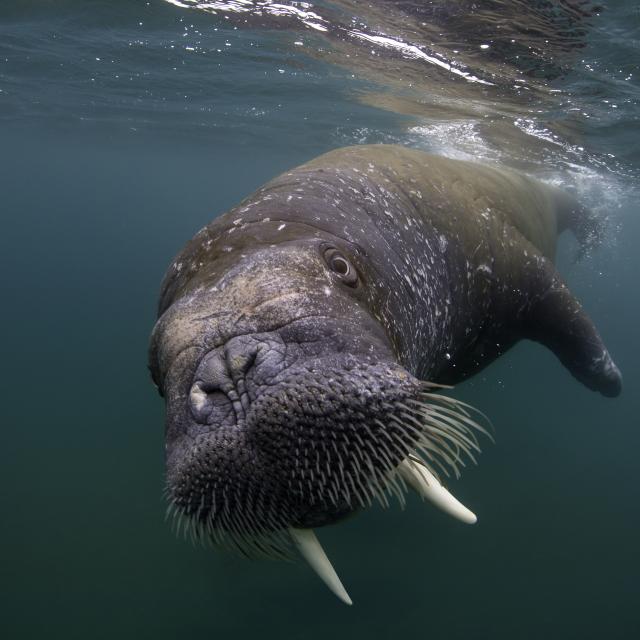 © naturepl.com / Franco Banfi / WWF
2020-21
Download -
 © Shutterstock, martinho Smart, WWF
2019-20
Download -
 © WWF
© WWF2018-19
Download -
 © Richard Barrett
2017-18
Download -
 © Martin Harvey / WWF
2016-17
Download -
 © naturepl.com / Tim Laman / WWF
2015-16
Download -
 © naturepl.com / Andy Rouse / WWF
2014-15
Download -
2013-14
Download -
 © Andy Rouse
2012-13
Download -
 © Anup Shah
2011-12
Download -
 © Tony Heald/Nature Picture Library
2010-11
Download -
2009-10
Download -
 © Martin Harvey 2010
2008-09
Download -
2007-08
Download -
 © WWF-Canon / Martin HARVEY
2006-07
Download
/
Grant Payments
-
 © Tom Vierus / WWF-Pacific
FY25
Download -
 © WWF / KLEIN & HUBERT
FY24
Download -
 © Wild Wonders of Europe / Laszlo Novak / WWF
FY23
Download -
 © Shutterstock / arturaska / WWF
FY22
Download -
 © wildlifewitholly / WWF-UK
FY21
Download -
 © Pexels / Dariusz Grosa
FY20
Download -
 © Ben Cranke
FY19
Download -
 © Steve Morello / WWF
FY18
Download -
 © WWF-Indonesia / Tiger Survey Team
FY17
Download -
 © WWF-Canon/John MacKINNON
FY16
Download
/